A sensor is a device that detects a physical condition or change in its environment and converts it into a signal that can be measured, displayed, or used by a control system. That condition might be pressure, temperature, level, flow, position, humidity, or another variable. In industrial applications, the sensor is the part that “feels” the process and turns what is happening in the real world into usable information.
How a sensor works
Every sensor starts with a measurand, which is the physical quantity being observed. For example, in a pressure application, the measurand is pressure. In a tank, it may be liquid level. In a machine, it may be a vibration or temperature.
The sensor element reacts to that physical input. A pressure sensor may use a diaphragm that deflects slightly when pressure is applied. A temperature sensor may use a material whose electrical resistance changes with temperature. The sensor then converts that physical change into an electrical output, such as a voltage, current signal, resistance change, or digital communication signal.
That output can then be used by a PLC, display, control system, alarm, or data logger.
Why sensors matter
Without sensors, there is no reliable way to monitor or control the process. They are essential because they provide the real measurement data that operators and systems depend on.
In industry, sensors are used to:
- monitor process conditions
- protect equipment
- maintain product quality
- improve efficiency
- support automation and safety
A tank level control loop, for example, depends on a sensor to tell the system how much liquid is in the tank. A pressure control loop depends on a sensor to show whether the pressure is too high, too low, or within the target range.
Common types of sensors
Sensors exist in many forms, depending on what needs to be measured.
Pressure sensors
A pressure sensor measures the force exerted by a gas or liquid. This is one of the most common sensor types in the process industry. Pressure sensors are used in pumps, tanks, pipe systems, hydraulic systems, food production, water treatment, and energy applications.
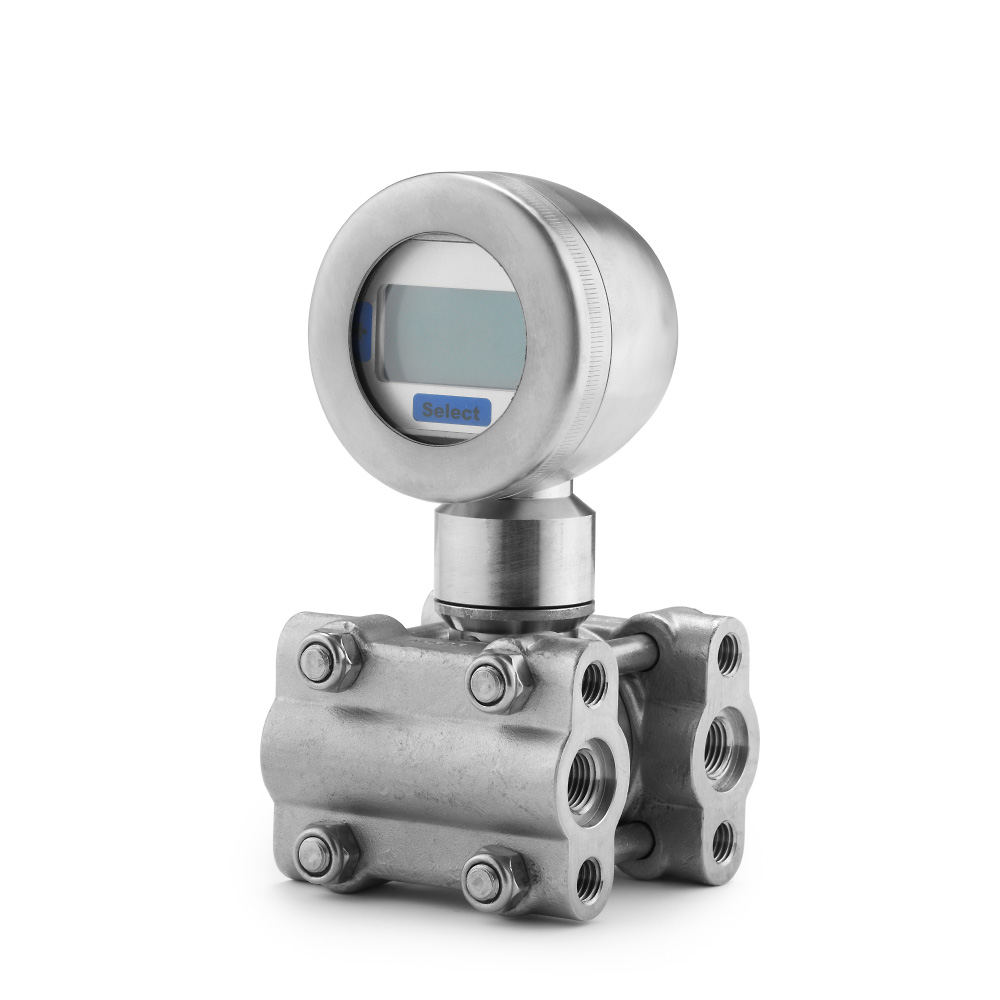
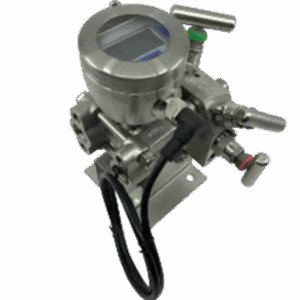
Pondus Instruments offers several pressure and level solutions where the sensing principle is based on piezoresistive technology. For example, the PT600 series supports pressure, differential pressure, and level measurement, with 4–20 mA, HART, and MODBUS communication.
Level sensors
A level sensor measures how much liquid or material is in a tank, pit, reservoir, or vessel. Some level sensors measure directly, while others infer levels from hydrostatic pressure.
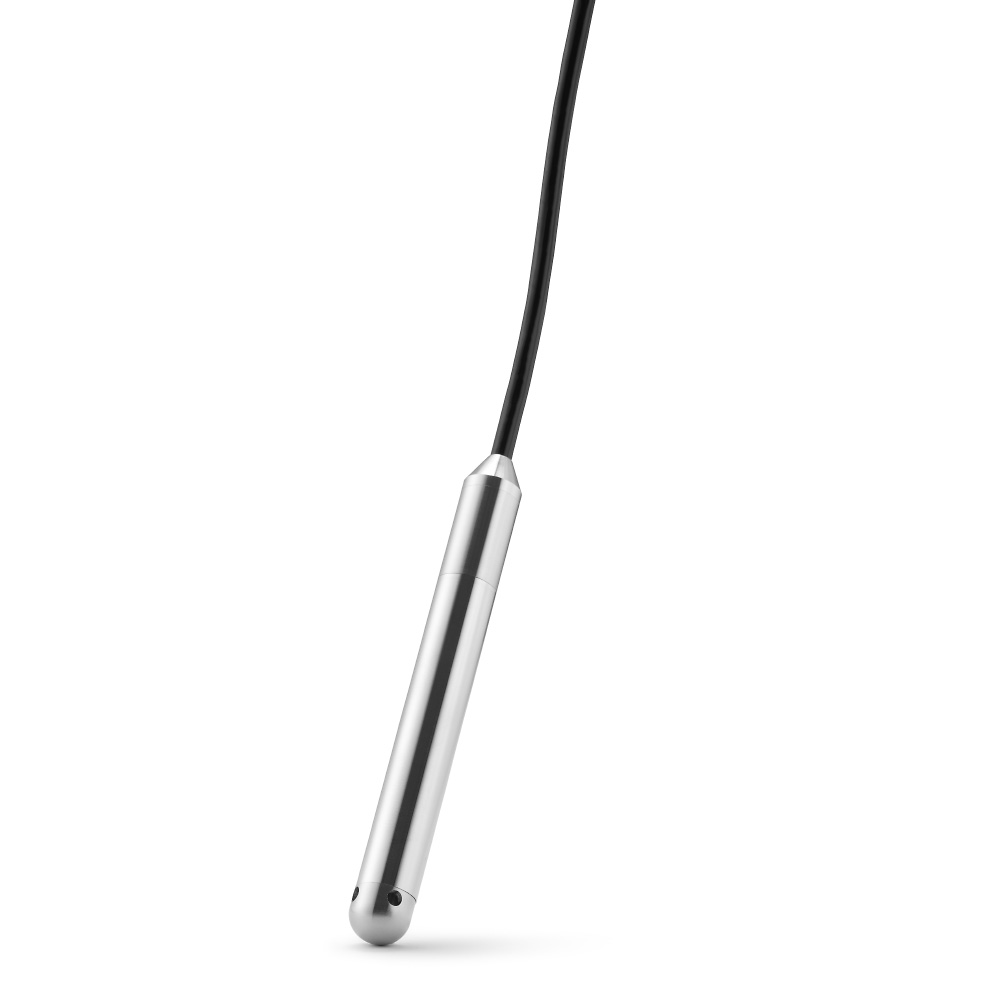
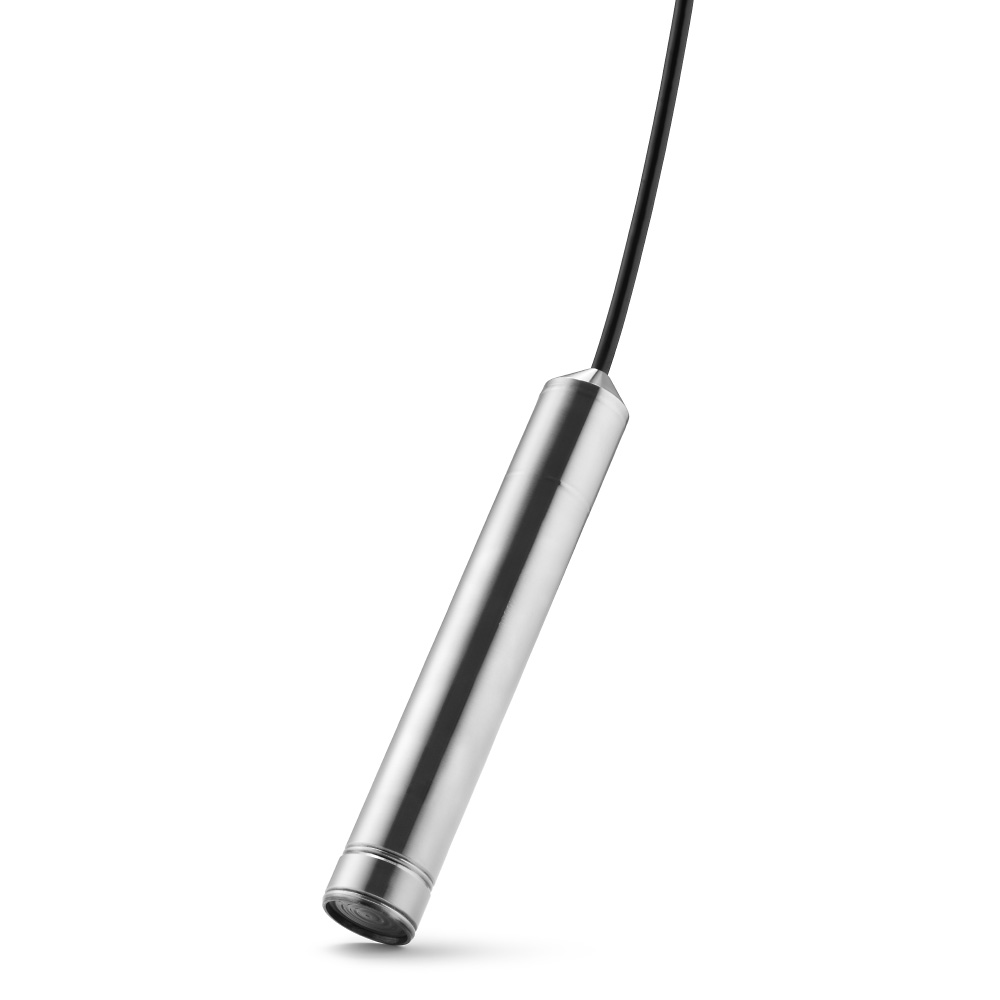
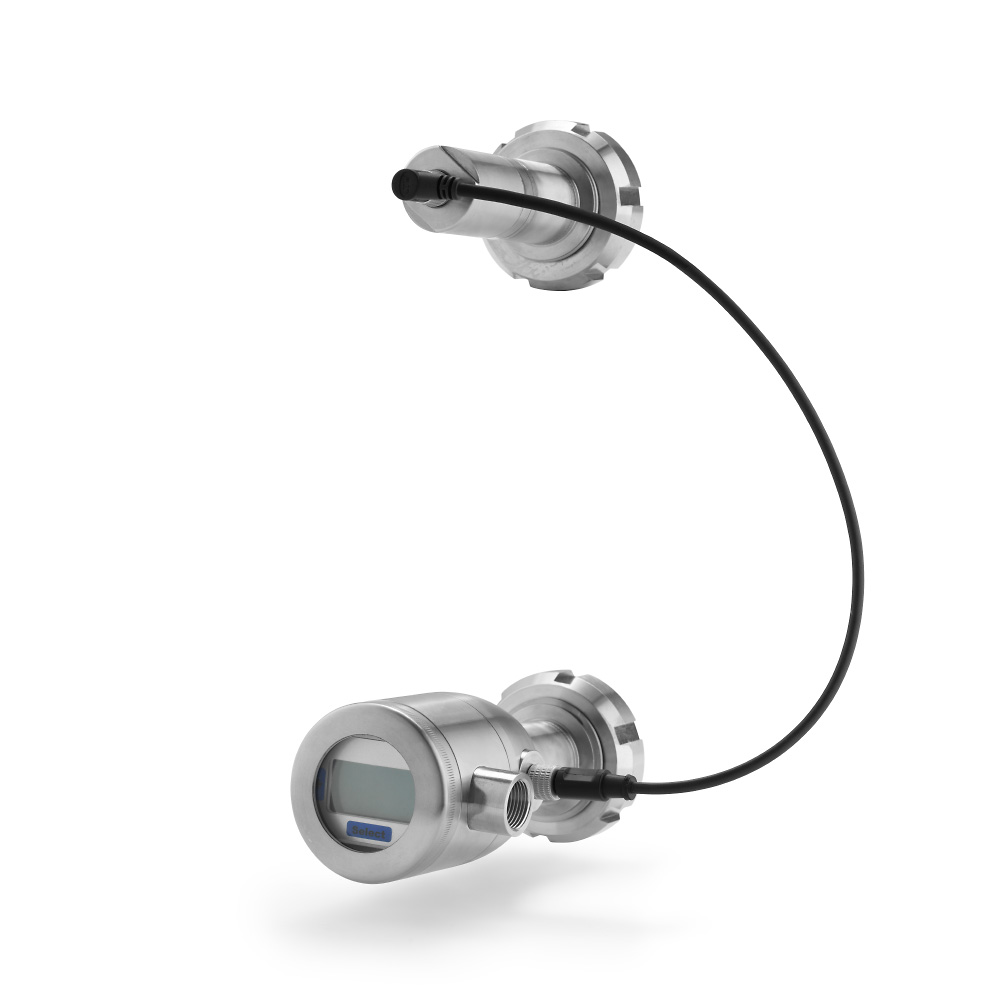
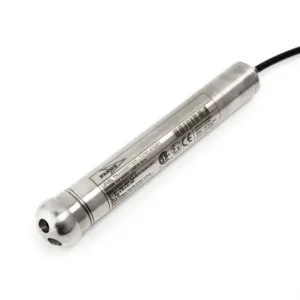
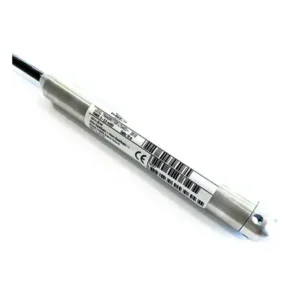
The LT100 submersible level transmitter is one example of a sensor designed for level measurement in liquids where the bottom pressure connection is not practical. It uses a submersible probe and HART communication for configuration and measurement.
Temperature sensors
A temperature sensor detects heat and converts it into a readable signal. These are widely used in process control, HVAC, manufacturing, and laboratory systems.
Position and proximity sensors
These sensors detect movement, location, or the presence of an object. They are common in automation, machine safety, and robotics.
Flow sensors
A flow sensor measures how much liquid or gas is moving through a pipe or system. These are used where accurate dosing, batching, or process control is important.
The difference between a sensor and a transmitter
These two terms are often used together, but they are not always exactly the same.
A sensor is an element that detects the physical variable.
A transmitter usually includes the sensor plus electronics that convert the sensor signal into a standardized output, such as 4–20 mA, HART, or MODBUS, so it can be sent to a control system.
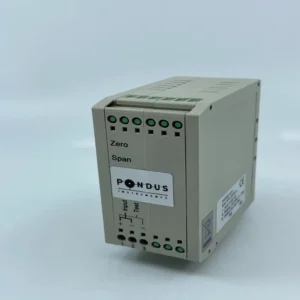
In many industrial products, the sensor and transmitter are built into one device. That is common in pressure instrumentation. For example, a pressure transmitter contains the sensing element, compensation electronics, and output interface in one assembled unit. Pondus Instruments and LT100 are examples of this type of integrated measurement device.
What makes a sensor suitable for industrial use
Not every sensor fits every application. In industrial environments, the right sensor needs to match both the process and the operating conditions.
Important considerations include accuracy, stability, temperature performance, overload resistance, chemical compatibility, hygiene requirements, and output type.
For example, PT600 transmitters are designed with modular construction, multiple process connection options, digital communication, and low temperature drift for demanding pressure and level applications.
In harsh level applications, a submersible design such as LT100 may be more appropriate, especially where a bottom-mounted pressure connection is not possible or desirable.
Sensors in pressure measurement
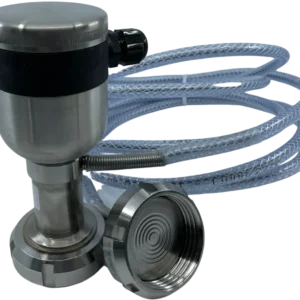
In pressure measurement, the sensor is often built around a diaphragm and a sensing element. When process pressure acts on the diaphragm, the force is transferred to the sensor element, which produces a corresponding electrical signal.
In Pondus documentation, the PT600 pressure and level design uses a piezoresistive pressure sensor connected to the process via a diaphragm and capillary tube, while the differential pressure version uses a central piezoresistive sensor connected between membrane chambers.
This is a good example of how the general definition of a sensor becomes practical in real instrumentation: the sensor detects pressure, and the transmitter electronics convert that measurement into a stable industrial signal.
Best practices when choosing a sensor
When selecting a sensor, start with the application rather than the product name. The most important question is not simply “Which sensor do I need?” but “What exactly must be measured, under what conditions, and for what purpose?”
A good selection process considers the measured variable, measuring range, media compatibility, mounting method, temperature, pressure spikes, cleaning requirements, and communication needs.
For pressure and level measurement, it is also important to think about whether you need to gauge pressure, absolute pressure, differential pressure, or hydrostatic level measurement. That decision affects the sensing principle and the transmitter design.
Conclusion
A sensor is the part of an instrument that detects a real physical condition and turns it into a usable signal. It is the foundation of measurement in automation and process control. Whether the task is measuring pressure in a pipe, level in a tank, or temperature in a system, the sensor is what makes reliable monitoring possible.
For pressure, differential pressure, and level applications, choosing the right sensor design is just as important as choosing the right output signal or connection. Products such as PT600 and LT100 show how the sensing element and transmitter electronics work together in practical industrial solutions.
Have more questions or need guidance on choosing the right pressure transmitter? Get in touch with Pondus Instruments, and we’ll help you find the solution that best fits your needs.