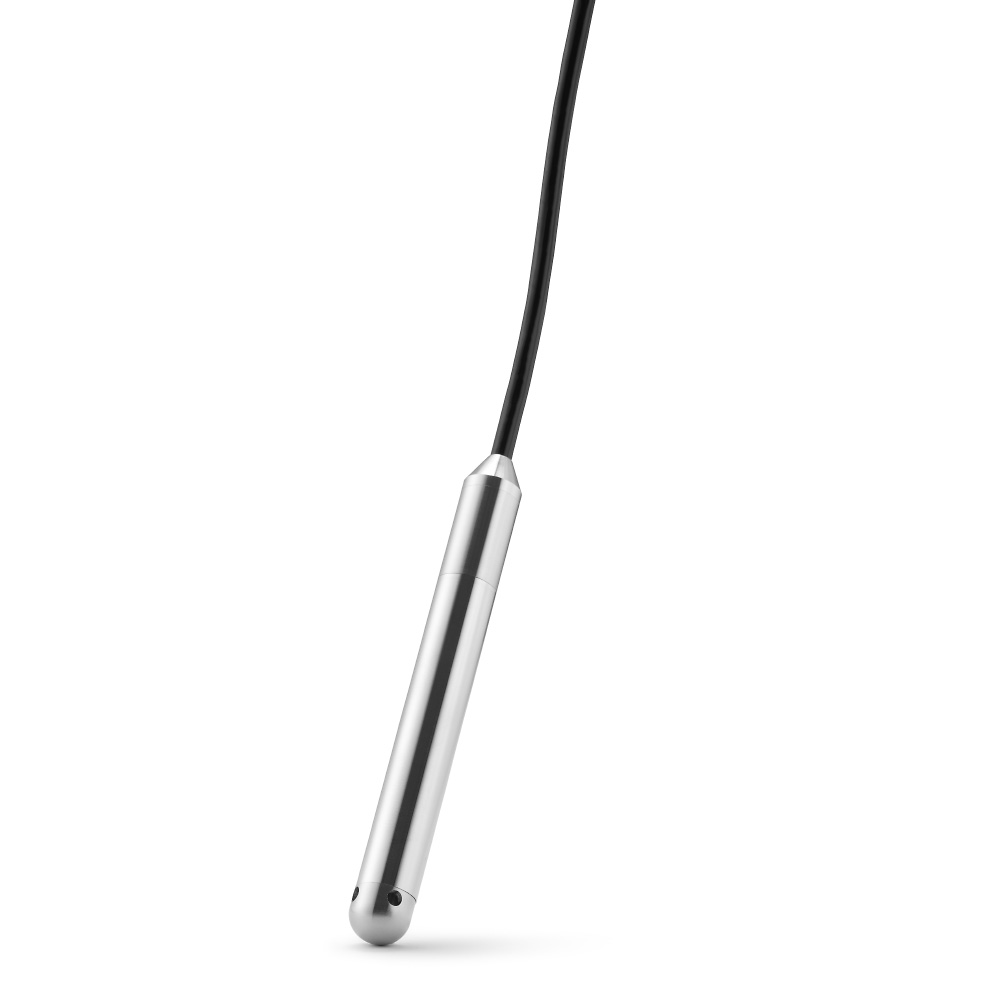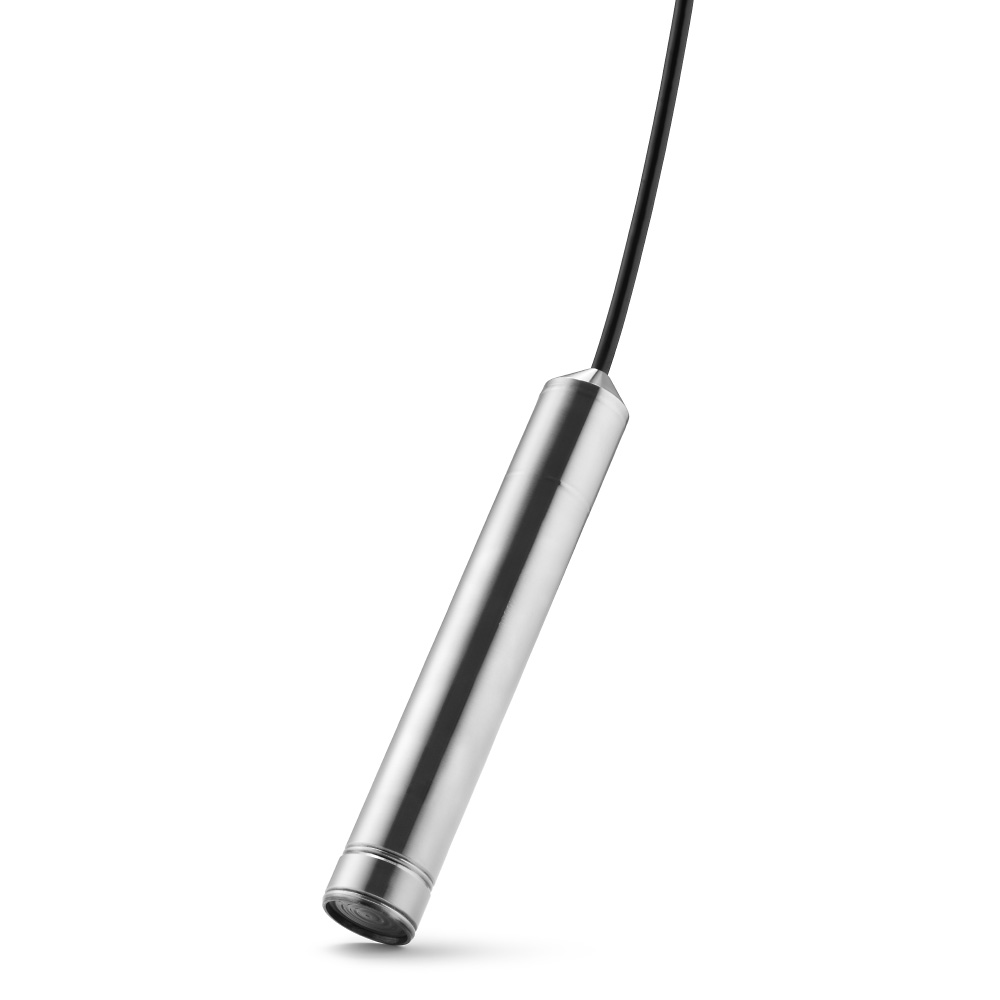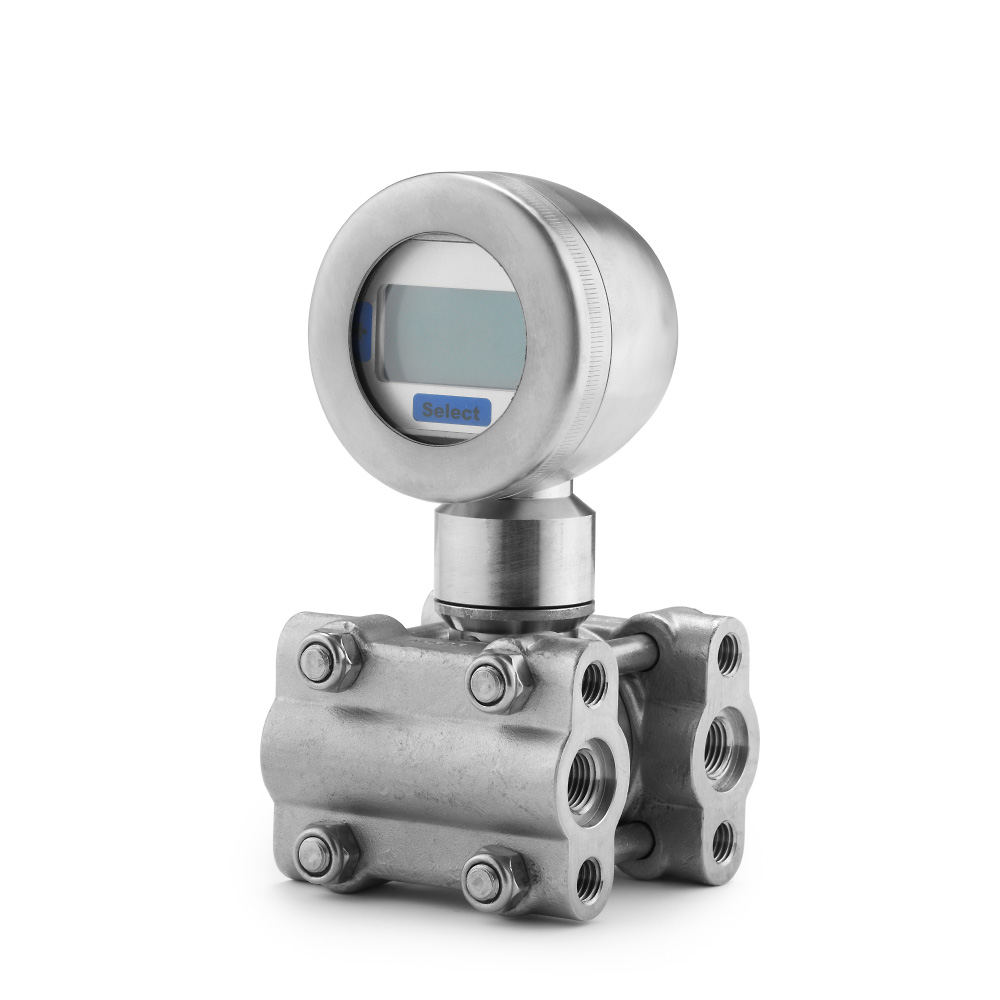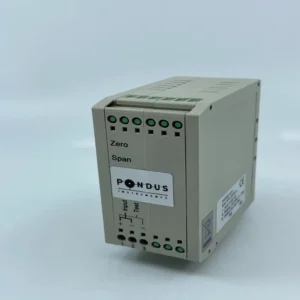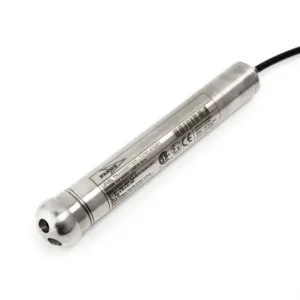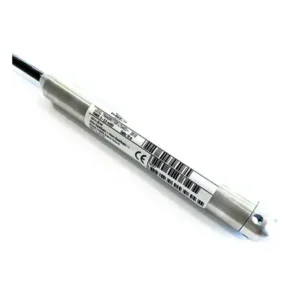
A differential pressure (DP) level transmitter measures liquid level by sensing the pressure at the bottom of a vessel and subtracting the pressure at the top (or atmosphere); the resulting Δp is converted to level. This is the standard approach for level in pressurised or vented tanks, including hygienic applications. (“PT60 type T” and “PT600RSH” from Pondus Instruments are purpose-built examples.)
How it works
A DP level setup uses two sensing points:
- High/“+” side at the tank bottom measures hydrostatic pressure from liquid head.
- Low/“–” side at the tank top measures headspace pressure (or atmosphere).
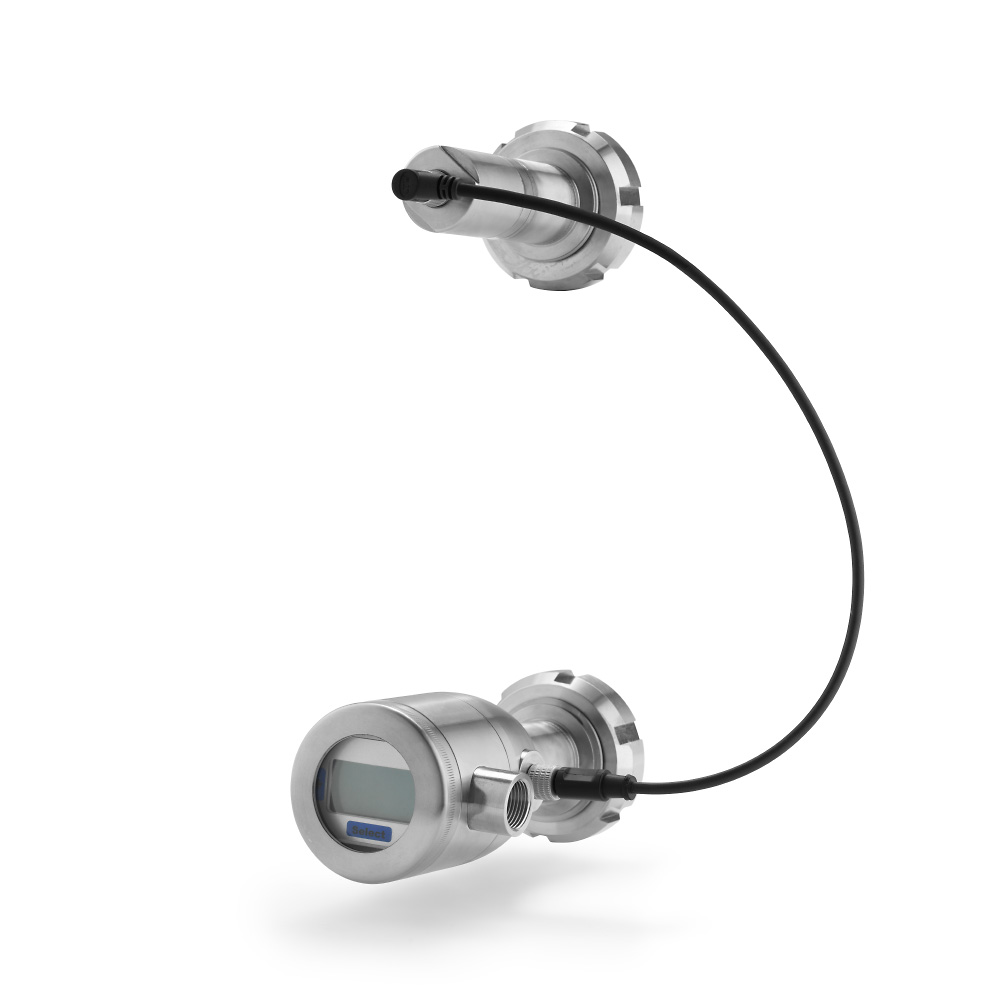
The transmitter (or a paired transmitter + remote sensor) computes the difference. Pondus’s D10RSH display can even combine a local sensor with a remote sensor to calculate differential pressure digitally over the loop.
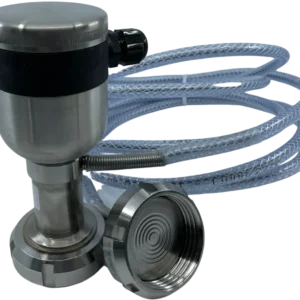
In hygienic DP designs such as PT60 type T, a plus diaphragm is on the body while the minus side is brought in via a capillary; both sides use oil-filled diaphragms that relay pressure to a piezoresistive sensor.
Key selection factors
- Static pressure & range: Choose a span that covers the maximum differential; note any static pressure to which both sides are simultaneously exposed. Hygienic DP (type T) is intended for low–medium static pressure tanks.
- Process connection & wetted materials: Hygienic nuts (SMS Rd60-6), clamps 38/51, and others are available; select diaphragm materials to suit media (e.g., Hastelloy C-276).
- Accuracy & turndown: PT600 platform offers 0.1% (0.075% option) with 100:1 turndown, suitable when you need one hardware type across many ranges.
- Communication & integration: 4–20 mA with HART and MODBUS/RS-485 are standard on PT600, useful for remote diagnostics and re-ranging.
- Environment & protection: Lightning protection is an option when cabling runs are exposed; Ex ia intrinsic safety is available (not in combination with lightning option).
Installation options
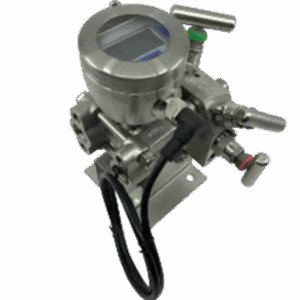
- Classic DP transmitter (single body): Both process sides connect to one DP body. Good when impulse lines are short and accessible. (Pondus PT600RSH)
- Hygienic DP with capillary on the minus side: Minimises dead legs in sanitary vessels and simplifies cleaning (Pondus PT60 type T).
- Two-sensor digital DP: Use two pressure transmitters linked via the D10RSH to compute differential—handy where a single DP body is impractical or when you need easy sensor replacement.
Good practices
- Zeroing after installation: Mounting orientation and diaphragm handling can shift zero. PT600’s Autozero lets you reset 4 mA at the actual “zero-level” pressure via a button or shorting two pins—no extra tools.
- Manage temperature effects: Capillaries on the minus side respond more slowly and can introduce thermal influence; insulate and route to keep the capillary and body at similar temperatures.
- Plan for EMI and surges: Where lightning is a risk, specify the integrated surge protection and bond shields correctly.
Typical features you can expect from Pondus Instruments
- Accuracy & stability with smart compensation and minimal oil-volume diaphragms.
- Rugged hygienic design rated to continuous 150 °C media on PT60/PT600 families.
- Flexible I/O: 4–20 mA + HART + MODBUS across the line.
- Field tools: PI200PS/PSD kit and MEP7 Modbus Tool for configuration and maintenance.
Matching products (subtle guidance)
- Pressurised food & life-science tanks → (“PT60 type T hygienic differential pressure transmitter) for plus-on-body/minus-via-capillary hygienic installs.
- General industrial DP/level → (PT600RSH differential pressure transmitter) with Autozero, HART/MODBUS, lightning option.
- Challenging layouts or easy swap-out needs → two-sensor solution using (“D10RSH display”) to compute Δp from two transmitters.
Conclusion
A differential pressure level transmitter determines level by subtracting headspace pressure from bottom hydrostatic pressure; it’s robust for both vented and pressurised vessels and is available in hygienic and digital variants to match your process and integration needs. For sanitary tanks, consider PT60 type T; for general DP/level with advanced diagnostics and simple zeroing, consider PT600RSH.
Have more questions or need guidance on choosing the right pressure transmitter? Get in touch with Pondus Instruments, and we’ll help you find the solution that best fits your needs.