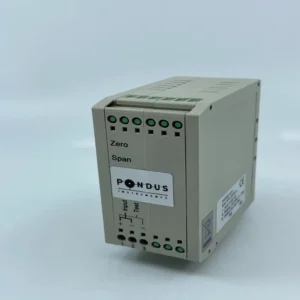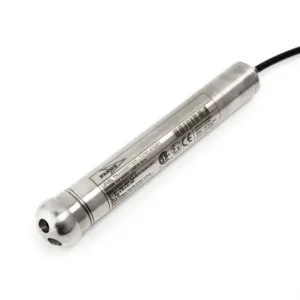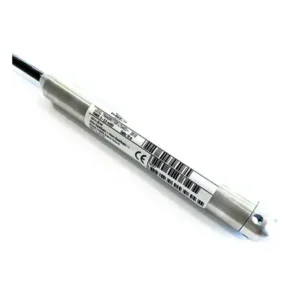
Pressure transmitter accuracy describes the maximum expected deviation between the pressure value the transmitter reports and the true process pressure, usually expressed as a percentage of the measuring range (for example 0.1 % of span). In practice, modern industrial transmitters typically offer reference accuracies between about 0.1–0.5 % of span; Pondus Instruments devices such as PT600, LT100 and PT03 sit in roughly the 0.1–0.35 % class depending on model and options.
What accuracy actually means for a pressure transmitter
When a datasheet says a transmitter has “accuracy 0.1 %”, it is not just one single error – it is usually a combination of several effects, grouped into a “reference accuracy” or “basic accuracy” figure.
Typical components are:
- Linearity (non-linearity) – how closely the output follows a straight line between zero and span.
- Hysteresis – difference between going up and coming down in pressure.
- Repeatability – how close repeated readings are under identical conditions.
Manufacturers combine these into a single number, often using a root-sum-square (RSS) or worst-case method. That is the “reference” accuracy – valid at reference conditions (room temperature, nominal supply, no vibration, etc.).
Pondus examples include:
- The PT600 series specifies 0.1 % of max range reference accuracy, with an optional 0.075 % high-accuracy version, plus a total temperature drift within 0.1 % of max range between −10 and +70 °C.
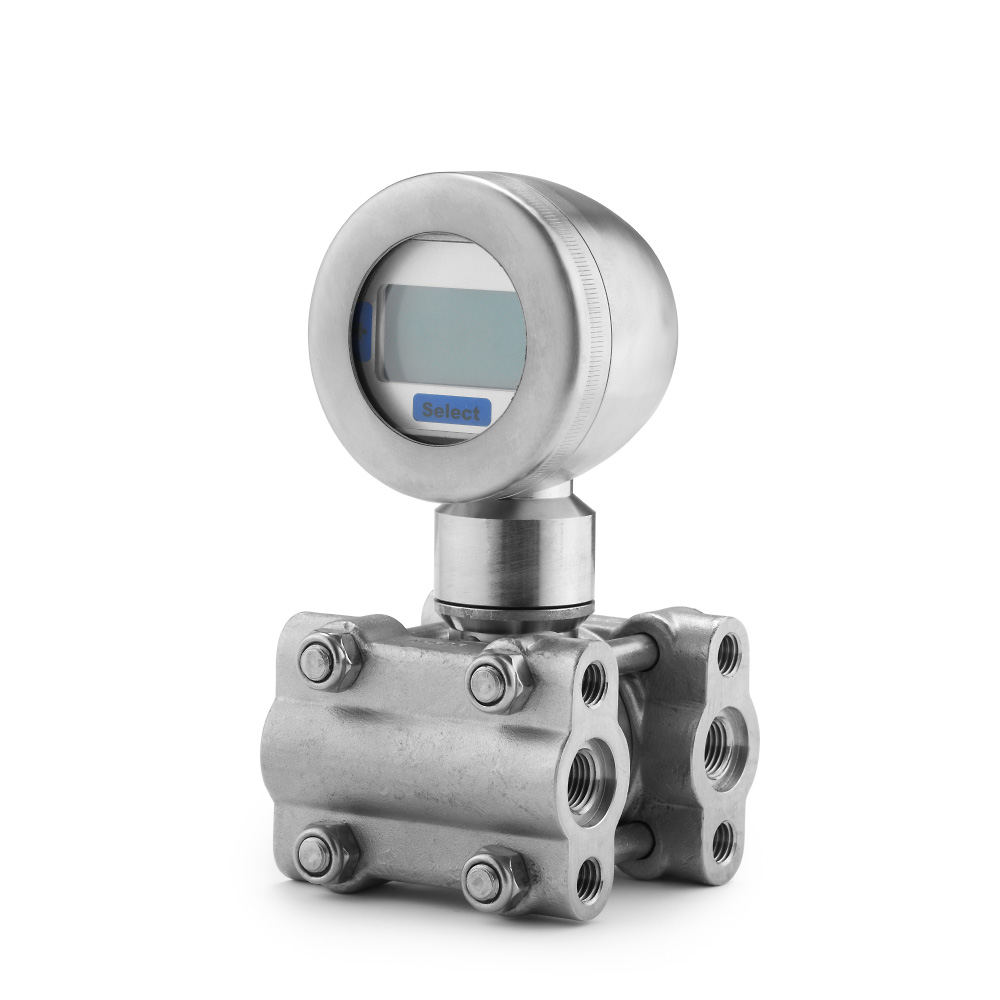
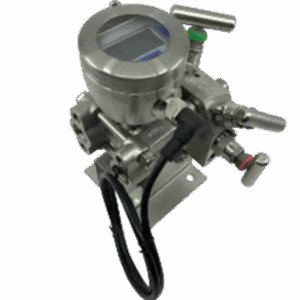
- The differential version PT600RSH is specified with 0.075 % accuracy and the same low temperature drift for its differential pressure ranges.
- The compact transmitter PT03 has 0.35 % accuracy (with a 0.15 % option), targeted at general-purpose applications.
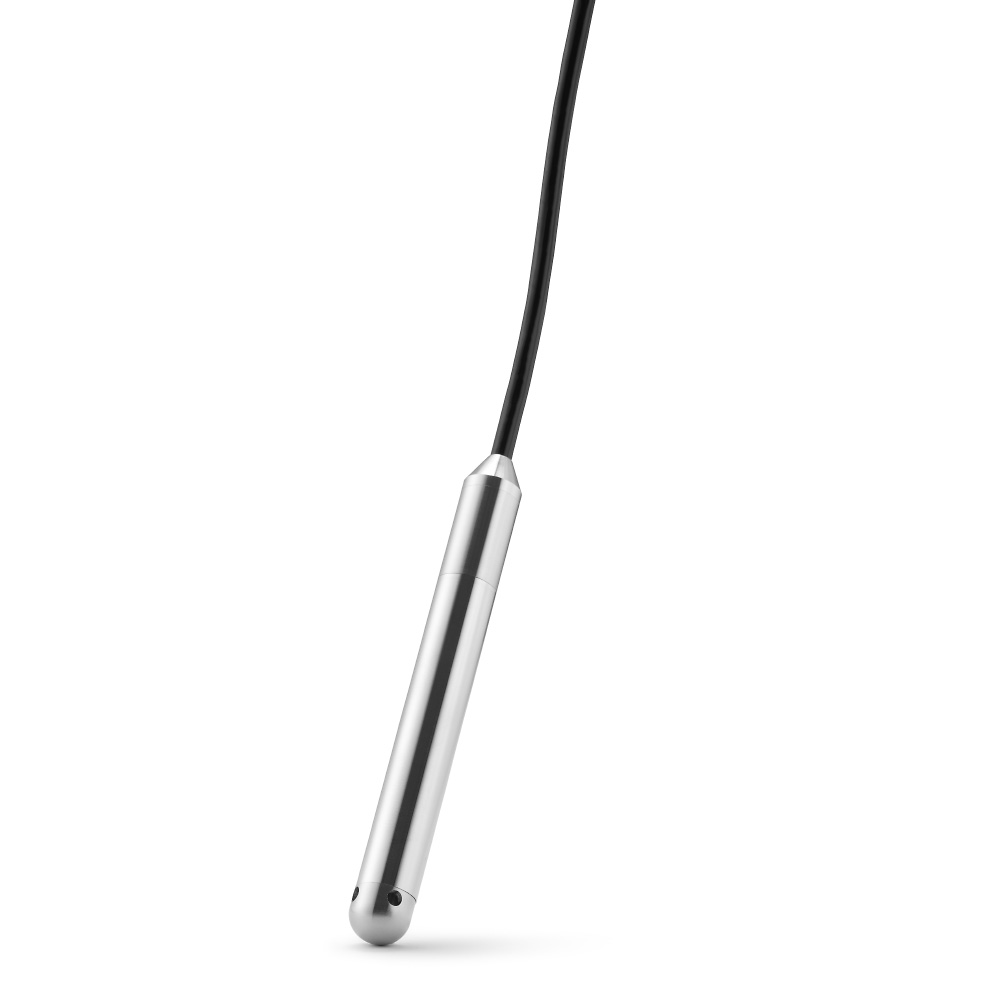
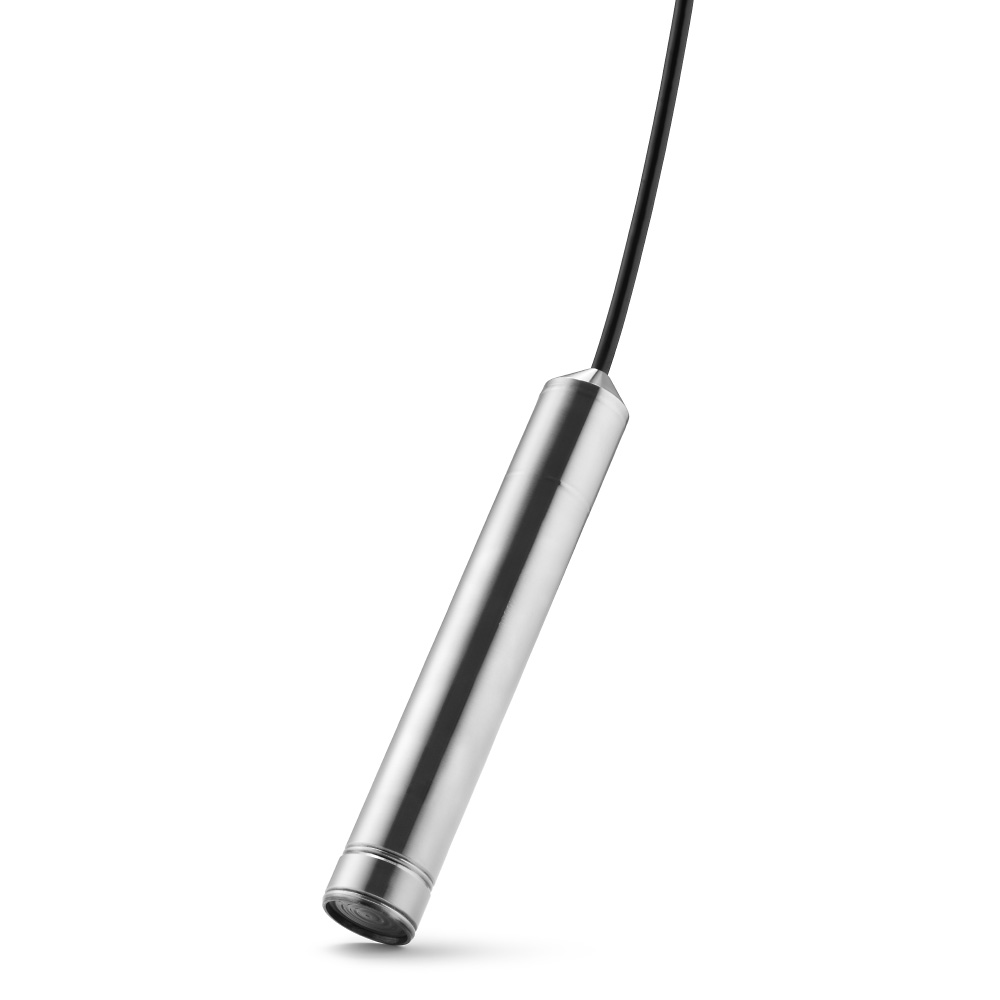
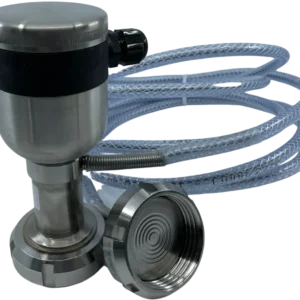
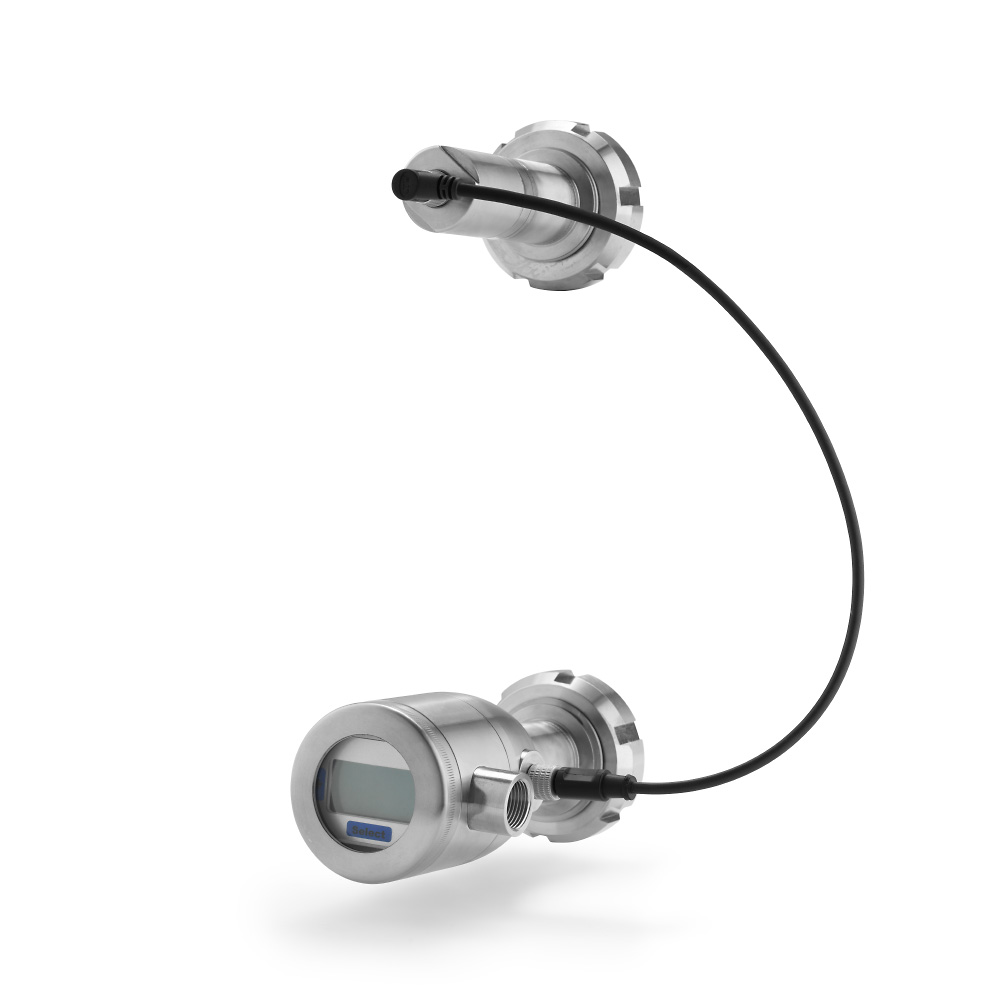
- The level transmitter LT100 is specified with 0.1 % accuracy for hydrostatic level measurement.
So accuracy is always linked to conditions, and you have to read the full statement to know exactly what that number really means.
How accuracy is specified
Percent of span vs percent of max range
Manufacturers express accuracy mainly in two ways:
- % of calibrated span – error scales with the span you configure. If you set 0–5 bar on a 0–10 bar sensor, 0.1 % of span is ±0.005 bar.
- % of max range / URL (upper range limit) – error is relative to the full sensor capability, regardless of how you range it.
Pondus uses “% of max range” in the PT600 family, both for reference accuracy and temperature drift (for example 0.1 % of max range between −10 and +70 °C).
That has an important consequence: if you use a big turndown (e.g. using a 0–10 bar transmitter as 0–1 bar), the absolute error stays the same, but relative error versus your configured span gets larger.
Static pressure and temperature effects
Beyond reference accuracy, datasheets specify additional influences such as:
- Temperature effect on zero and span – error per °C over a specified range.
- Static pressure effect (for DP transmitters) – additional error when both sides see high static pressure.
- Long-term stability – drift per year.
Examples from Pondus products include:
- PT600 series: total temperature drift is limited to 0.1 % of max range over −10…+70 °C.
- PT600RSH differential ranges specify static pressure dependence, especially important in the most sensitive low DP ranges.
- PT60 type T differential level transmitter explicitly quantifies extra error from temperature differences along the capillary tube and static pressure changes, and recommends insulation to minimise these effects.
These contributions add to the basic accuracy to form what is sometimes called total performance or total error band.
Typical accuracy classes and where they fit
A rough map of common accuracy levels:
- ~0.5–1.0 %
For simple monitoring, indication, or non-critical alarms. - ~0.25–0.35 %
Good general-purpose process transmitters. PT03 with 0.35 % (or 0.15 % optional) fits here. - ~0.1–0.15 %
For control loops, custody-related measurements, and high-value batch processes. PT600 and LT100 with 0.1 % accuracy sit in this class. - ~0.075 % and better
High-precision differential and reference transmitters, like PT600RSH with 0.075 % accuracy.
When you select a transmitter, you normally choose the lowest accuracy that still safely meets your process tolerance, to avoid over-specifying and overspending.
Simple example: interpreting the accuracy number
Take a PT600 gauge-pressure variant with max range 0–10 bar and 0.1 % of max range reference accuracy.
- 0.1 % = 0.001 (as a fraction).
- 0.001 × 10 bar = 0.01 bar (10 mbar) absolute error band due to reference accuracy.
If you range it as 0–10 bar, that is ±0.1 % of span.
If you range it down to 0–1 bar (turndown 10:1), the same ±0.01 bar is now ±1 % of your span.
The PT600 has a turndown capability of 100:1, but you need to be aware that very high turndown will make relative accuracy worse, since the spec is tied to the sensor’s max range.
This is why one often chooses the smallest sensor range that still covers the process, instead of always buying the largest range available.
Accuracy for differential pressure and level
Differential pressure transmitters
For DP applications (filters, flow elements, pressurised tanks), accuracy is affected by:
- Reference accuracy of the DP sensor (for example 0.075 % for PT600RSH).
- Static pressure effect – especially critical for low DP with high static (e.g. 50 mbar DP on top of 20 bar line pressure).
- Capillary and remote seals – can add temperature-dependent errors if long or poorly insulated.
The PT60 type T hygienic DP level transmitter datasheet explicitly warns about temperature differences between transmitter body and capillary or remote connection, giving specific error figures and recommending insulation to minimise these effects.
Hydrostatic level transmitters
Hydrostatic level accuracy is a combination of:
- Transmitter accuracy (e.g. 0.1 % for LT100).
- Density variation – changes in product density with temperature or composition.
- Installation – cable length, probe position, vent reference, etc.
Pondus level transmitters such as LT10 and LT100 are designed to minimise additional errors: robust diaphragms, appropriate venting, and, in LT10’s case, a two-sensor design that compensates for atmospheric pressure variations without a reference tube in the cable.
Real-world factors that reduce accuracy
Even with a good datasheet number, real installations can degrade performance. Important aspects include:
- Temperature extremes and gradients
Electronics and oil fill both change behaviour with temperature. PT600 mitigates this with very small oil volume and a direct sensor connection (no large remote seals), which reduces thermal expansion effects. - Static overload and pressure shocks
DP devices can be stressed by fast valve operations or pump trips. PT600 and PT600RSH use capillary tubes and overload membranes to limit sensor loading during transients. - Mechanical stress, fouling and coating
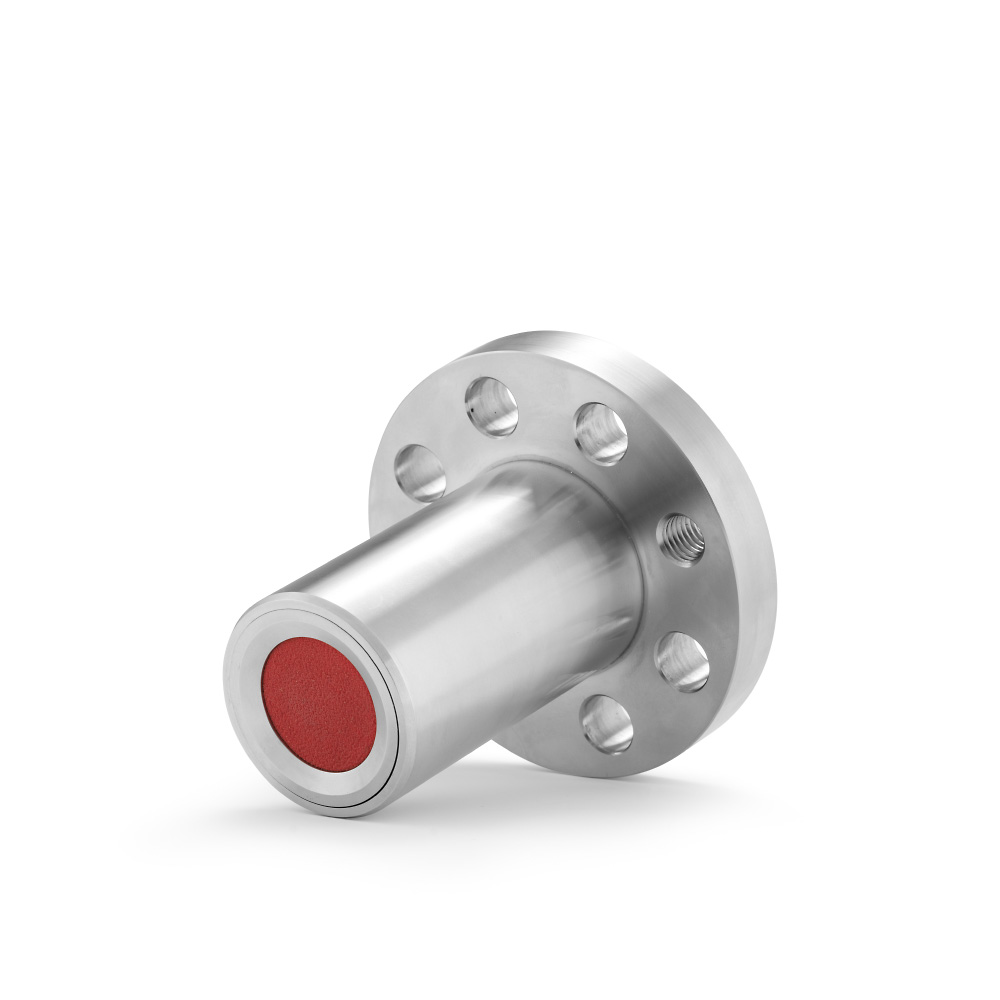
Build-up on the diaphragm or mechanical impacts can shift zero. Embossed diaphragms on PT600 and LT100 are designed to be robust and easy to clean without deformation, which helps maintain calibration over time. - EMC and lightning
Electrical noise or lightning surges can create false readings or damage electronics. Many Pondus instruments (PT600, LT10, LT100) offer EMC-robust design and optional lightning protection tested to IEC 61643-1. - Configuration and signal chain
Poor scaling, wrong damping, or low-resolution analog inputs in the control system can make a high-accuracy transmitter behave like a low-accuracy one.
Maintaining accuracy: calibration and autozero
Even the best transmitter drifts slightly over time, so periodic verification and calibration are essential. Key practices include:
- Initial calibration or acceptance test – verify against a reference when installing.
- Routine checks – typically yearly at first; extend intervals if drift is consistently small.
- Zero checks after maintenance – especially after cleaning with high-pressure jets or when you know the diaphragm has been touched.
Pondus transmitters make zero maintenance easier with an Autozero function:
- On devices like PT600, PT600RSH, LT100 and PT03, you reset zero by simply shorting two terminals or pressing a button for about 10 seconds – no external calibrator or system change needed.
- Autozero is particularly useful after high-pressure cleaning, mechanical contact with the diaphragm, or annual preventive maintenance.
This reduces the risk of systematic zero offsets, which are a common hidden source of accuracy loss.
How to choose the accuracy you actually need
When specifying a pressure transmitter, a practical approach is:
- Define the allowed process error
For example, “level must be within ±2 cm on a 5 m tank”, or “flow must be within ±1 % for billing”. - Break down the error budget
Reserve part for the transmitter, part for process effects (density, temperature), and part for the control system. - Choose an accuracy class
Monitoring only → 0.35–0.5 % transmitters like PT03 may be sufficient.
Control or high-value production → 0.1 % transmitters like PT600 or LT100.
High-precision DP flow or low-DP on high static → 0.075 % differential devices like PT600RSH. - Check conditions
Temperature range, static pressure, media properties, and turndown. Make sure the total specified errors still fit inside your budget. - Consider lifecycle
Features like robust diaphragms, lightning protection and Autozero will often have more impact on long-term accuracy than squeezing from 0.1 % down to 0.075 %.
Conclusion and next steps
In summary, pressure transmitter accuracy is the combined effect of reference accuracy, temperature and static pressure influences, mechanical design and long-term stability, all usually expressed as a percentage of span or max range. Choosing and applying transmitters correctly means matching that accuracy class to your process tolerance, understanding how turndown and conditions affect the real-world error, and maintaining the device through periodic calibration and simple tools like Autozero.
Have more questions or need guidance on choosing the right pressure transmitter? Get in touch with Pondus Instruments, and we will help you find the solution that best fits your needs.